
CENTRE FOR PEACE, OSIJEK PRESENTS HUMMUS RECIPE AS A PART OF THEIR CREATIVE TOOL - „COOKING LESSONS“
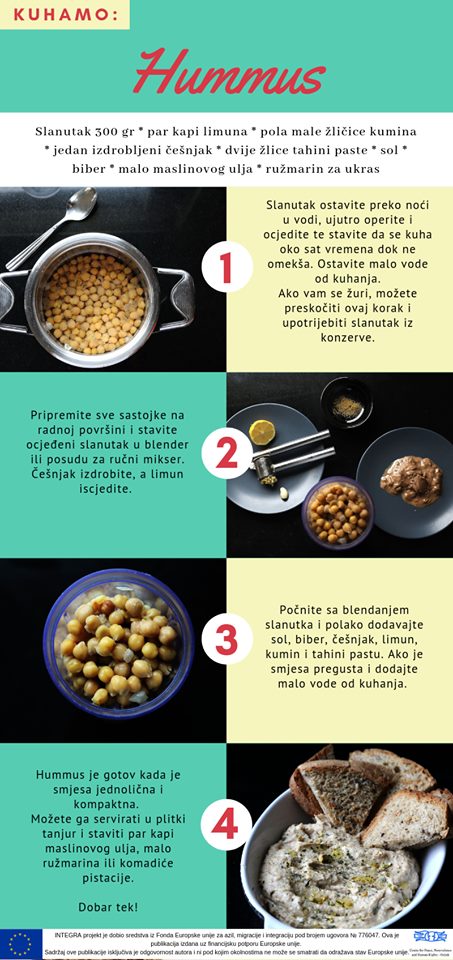
As a part of the creative tool in the framework of the INTEGRA project, Centre for Peace, nonviolence and human rights publishes foreign recipes. The online publications puts the culinary added-value of foreigners under the spotlight, and aims at better migrant integration by celebrating diversity.
On 13th of June Centre for Peace presented a hummus recipe. Hummus is a Levantine dip or spread made from cooked, mashed chickpeas or other beans, blended with tahini, olive oil, lemon juice, salt, and garlic. It is popular in the Middle East and Mediterranean, as well as in Middle Eastern cuisine around the globe. It can also be found in most grocery stores in North America and Europe.
One of the oldest mentions, and hints at where it is from is found in a Medieval cookbook called “Kita Wasf al-Atima al-Mutada”. Translated from Arabic, this means “The Description of Familiar Food” The recipe in this cookbook varies a bit from modern recipes – it contains no garlic or lemon, and also includes vinegar. Another cookbook from the 13th century (Kitāb al-Wusla ilā l-habīb) has a recipe that includes chickpeas and lemons, but no tahini or garlic.
