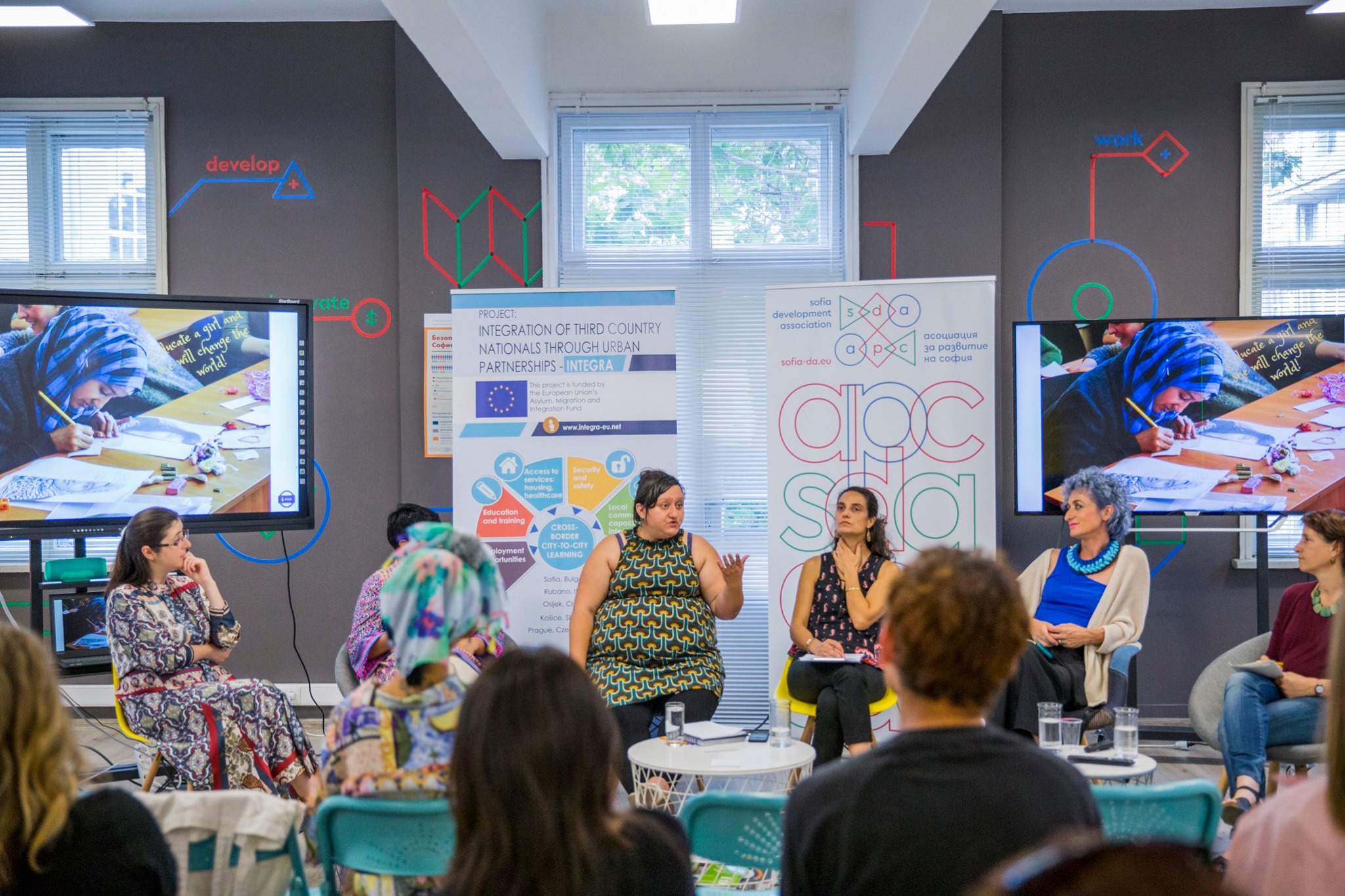
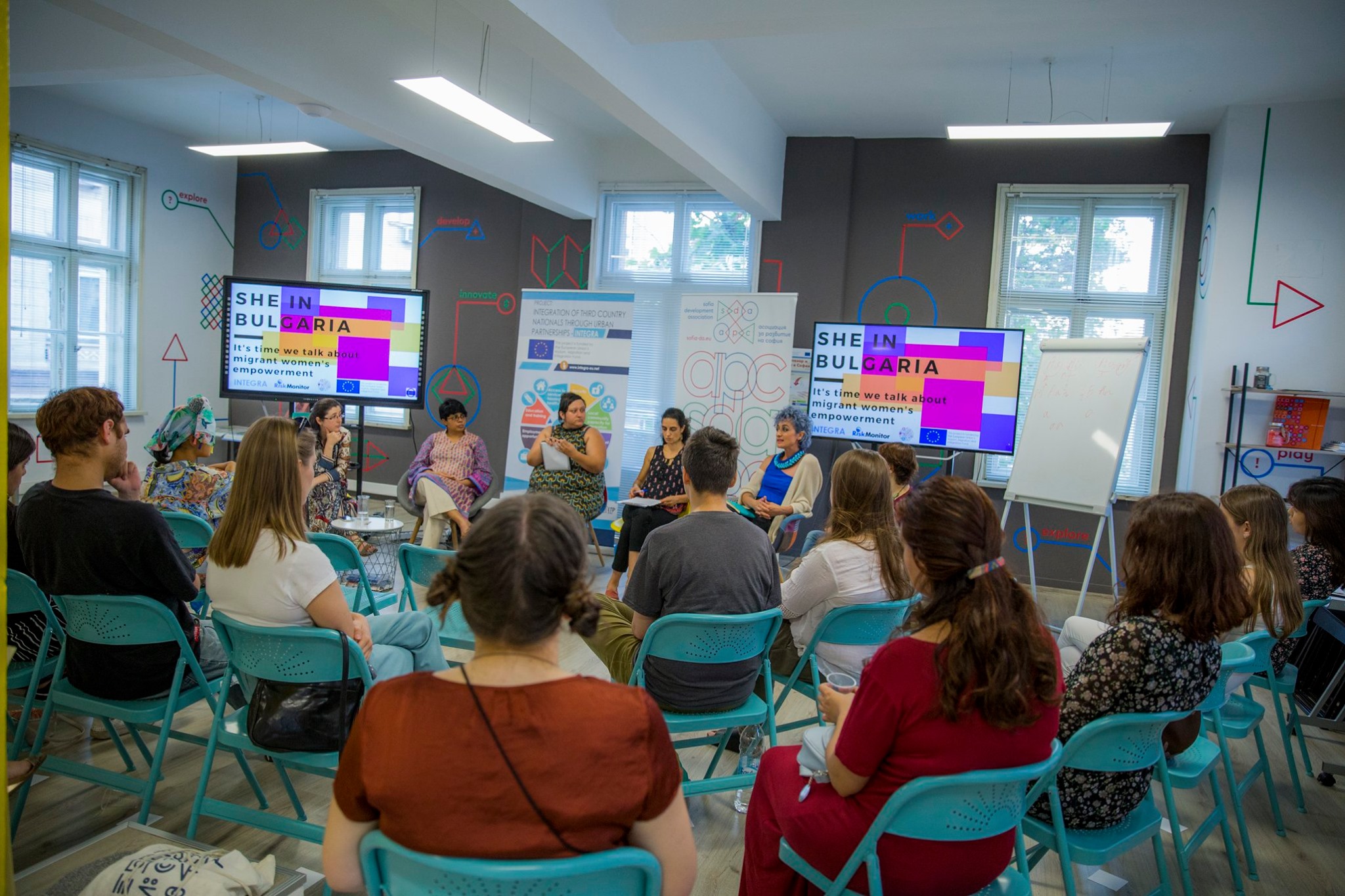
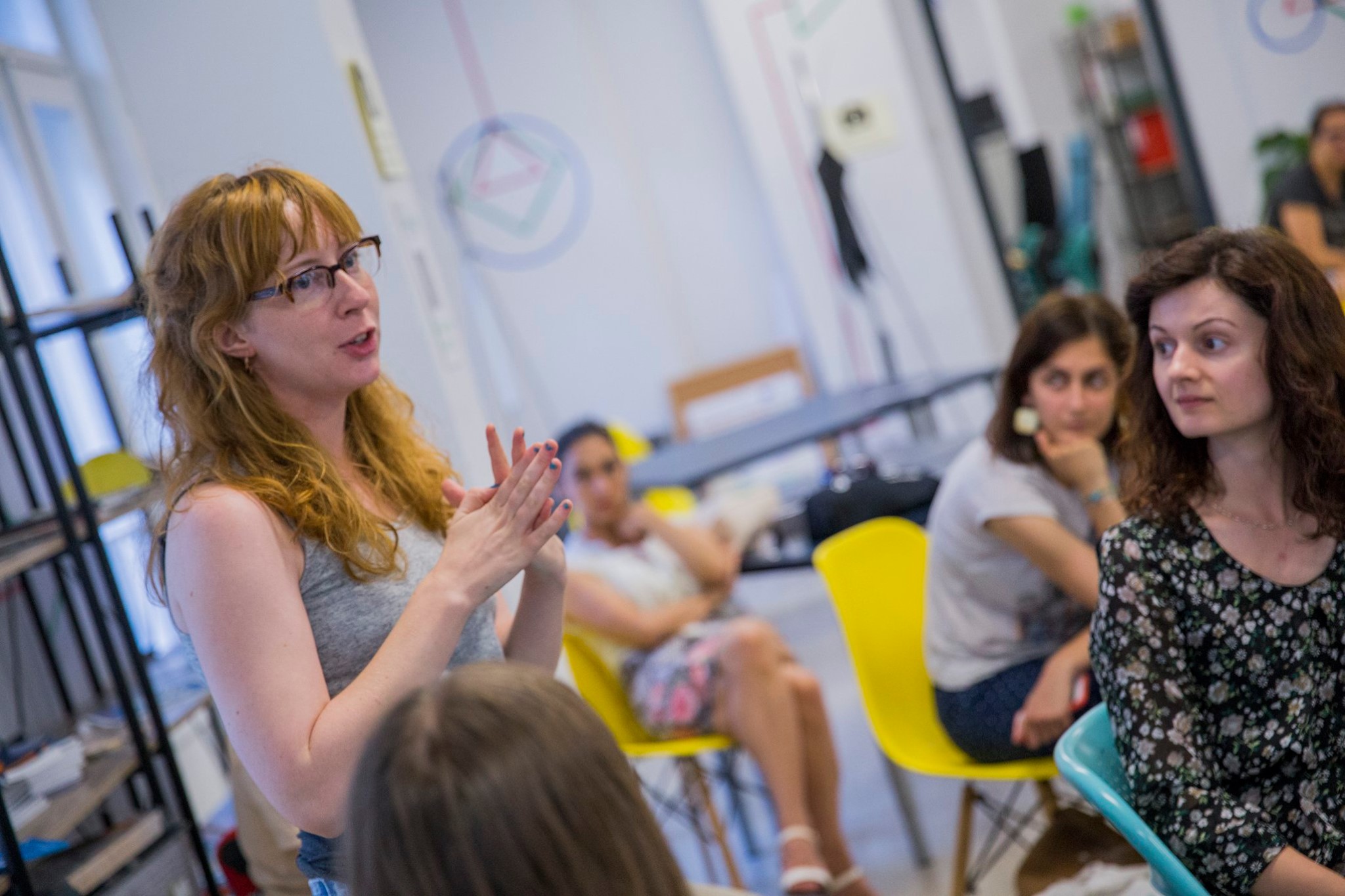
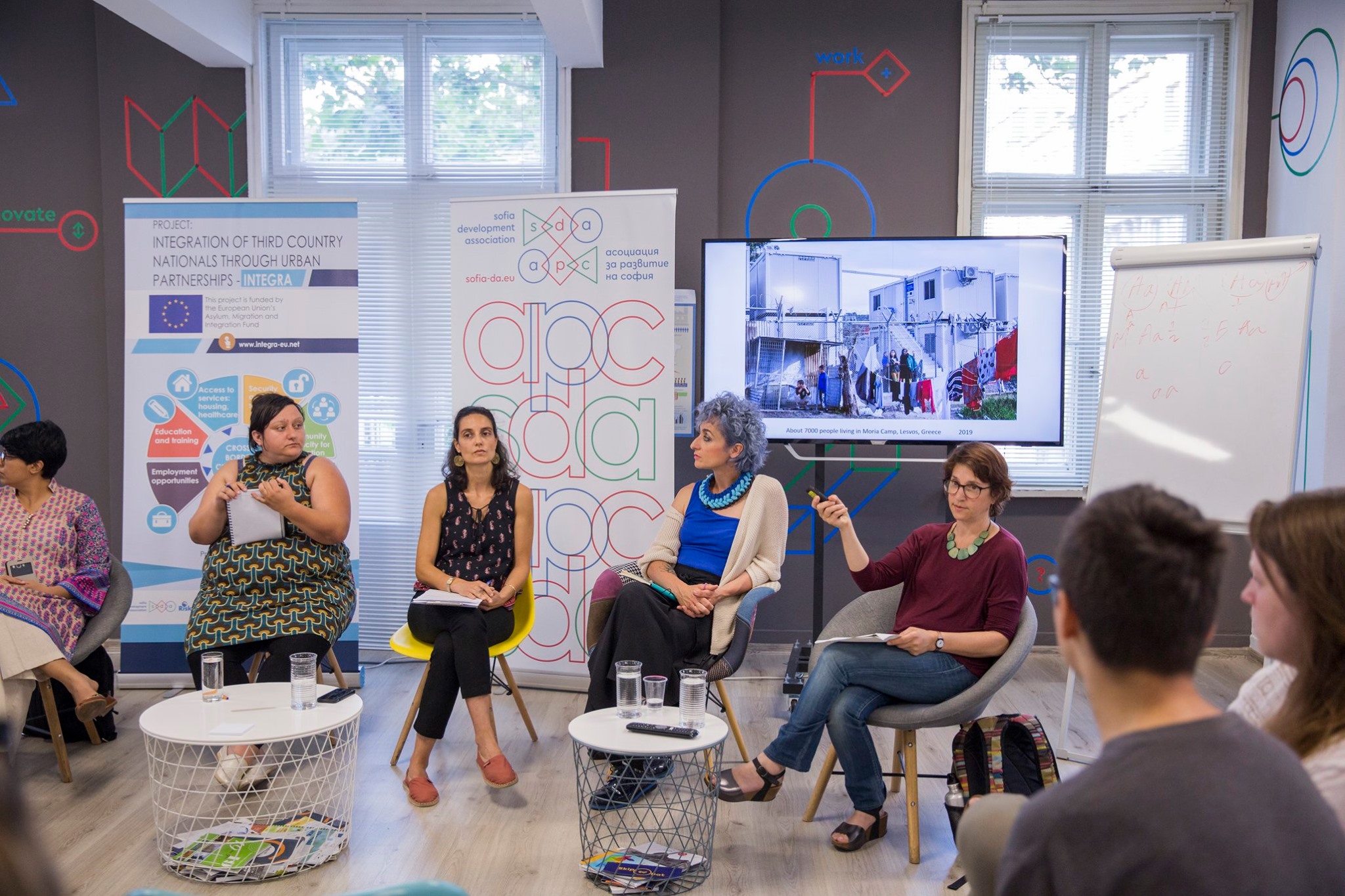
Migrant women’s empowerment was the topic of a joint event organised by RiskMonitor and Academy Ekaterina Karavelova on the 26th of June in Sofia in the framework of INTEGRA project. The event gave the floor to five women who are migrants in Bulgaria and Bulgarian women whose work is focused on providing legal and humanitarian services to migrants. The panel discussion explored the reasons behind the root causes of why women have to flee extremely conservative societies, the difficulties they experience on the road to safety and the challenges they encounter in host societies.
After the panel discussion the participants worked in small groups to discuss what kind of specific support is needed for migrant women in Sofia. The event raised awareness of a topic that often is left overlooked and silenced due to its complexity. Migrant women typically have numerous vulnerabilities that need to be addressed such as health issues, being single parents, the risk of trafficking and exploitation, limited access to the labour market due to residency status, childcare responsibility, etc., Often, embedded cultural barriers prevent them from seeking help and defending their rights. Negative attitudes towards them on the part of the host society nationals attitude make it even harder to find accommodation or work.
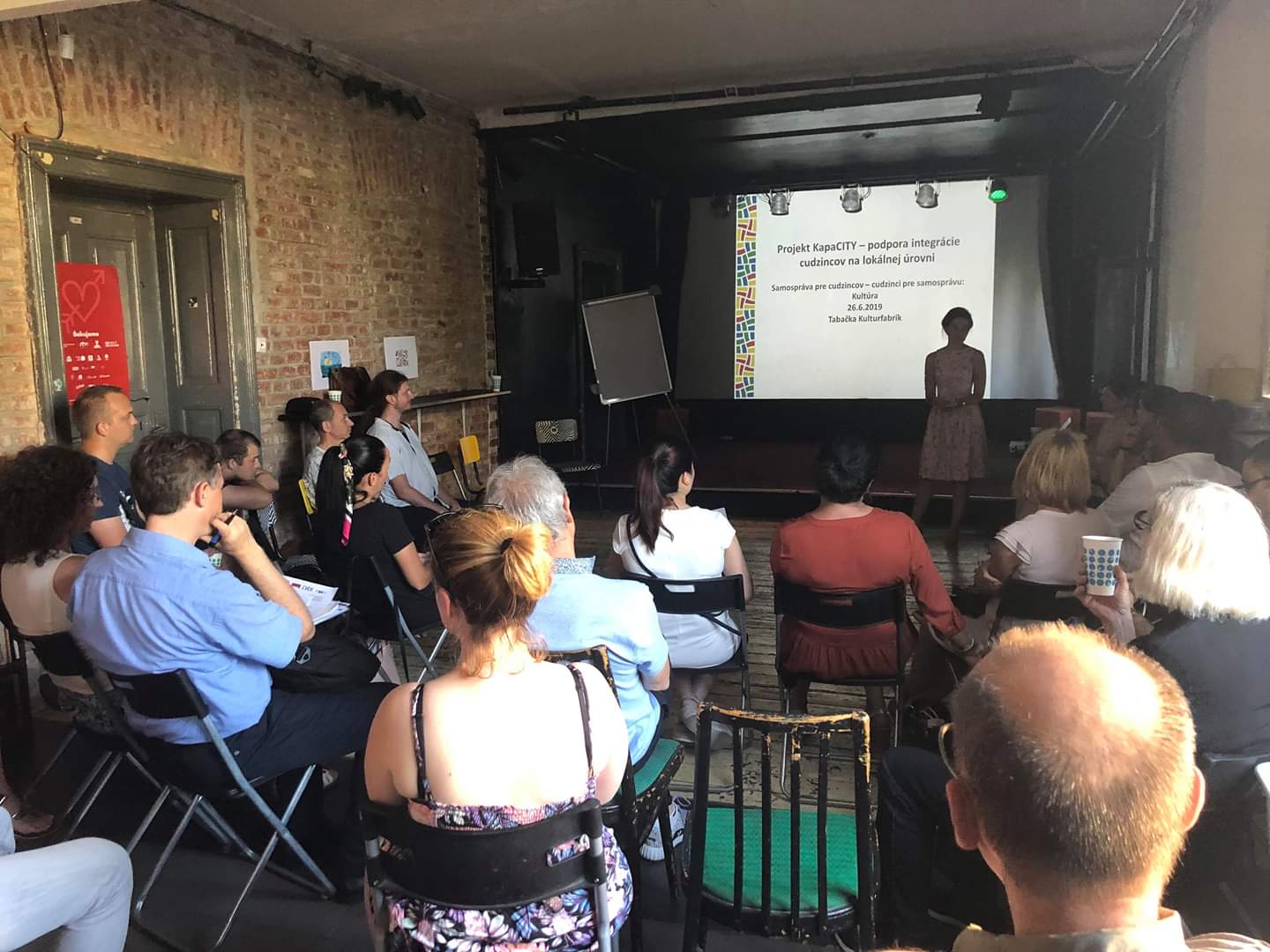
What is the role of municipality in promoting culture? What kind of local institutions are involved in the area of culture? What are the options for foreigners to present their culture in Košice? Do foreigners participate to cultural events? Do they organise cultural events?
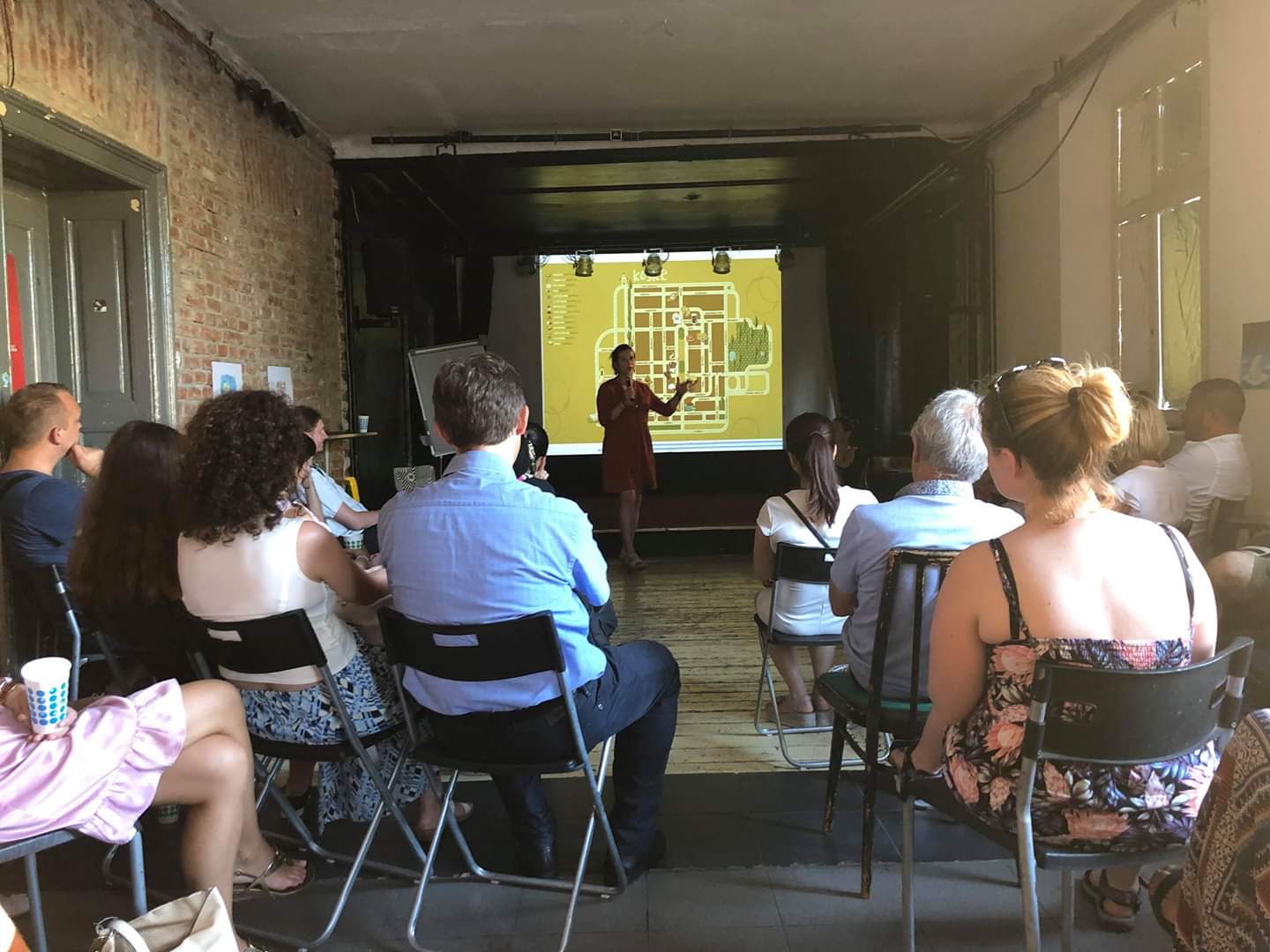
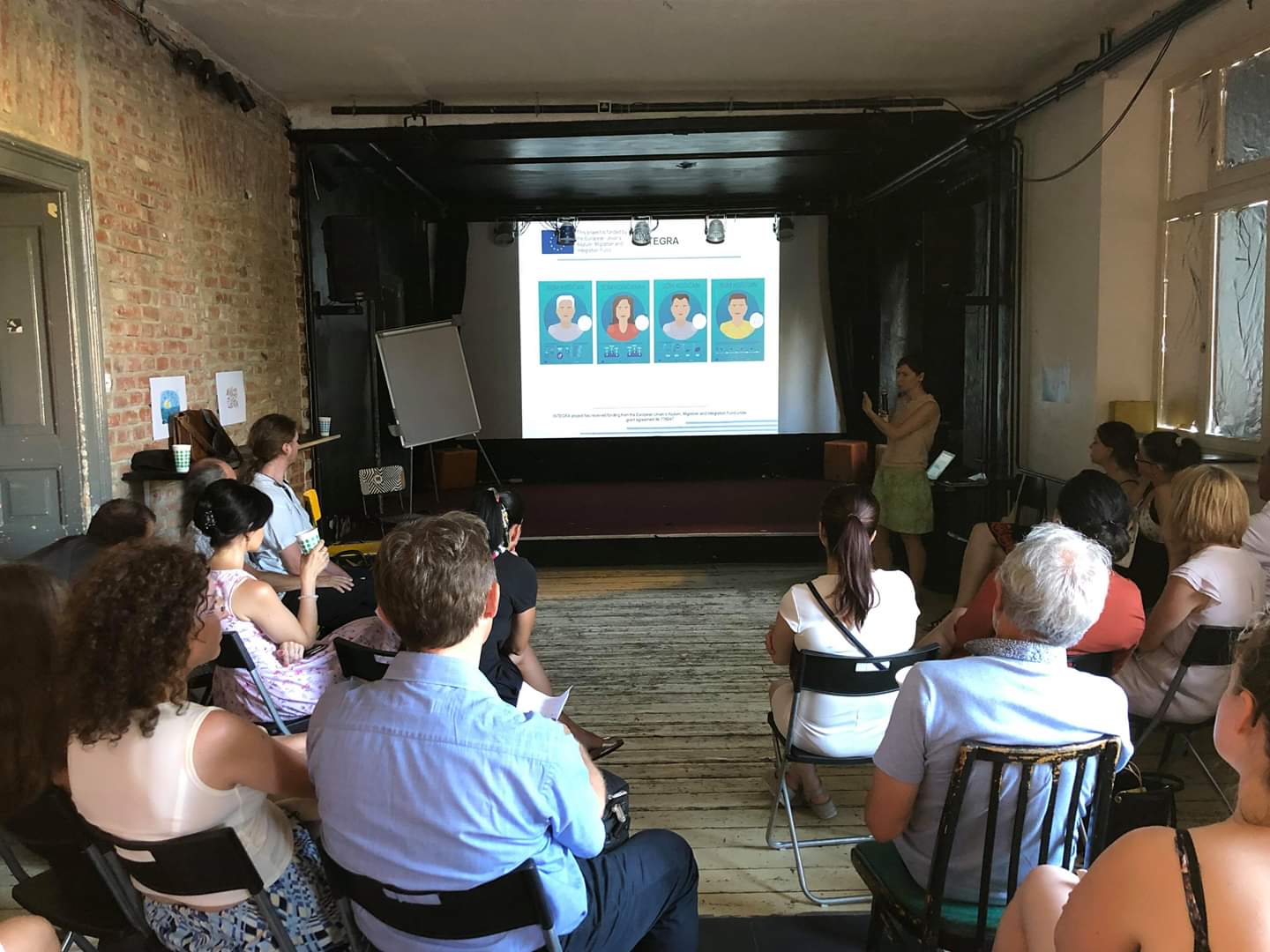
ETP Slovakia participated on the event organised by the Foundation of Milan Šimečka on 26. June 2019 in Tabačka - one of the Košice independent culture centres. Various NGOs including ETP Slovakia were tackling the above mentioned issues when discussing with representatives of public institutions, culture activists and TCN communitie.
ETP presented current communication campaign running within INTEGRA project. The campaign is based on personal stories of TCN living in Košice and the benefits they are bringing to the city. ETP prepared the illustrated map showing diversity of the food offered in the restaurants, bistros, cafes, pastry shops and delis owned by TCN from all over the world. ETP also presented the partnership with Košice Municipality Office and newly planned online informational portal for TCN, due to be finished in the autumn/winter. Special Potulka/Wandering - a very popular guided city walk – will connect locals with organisations of minorities, successful TCN employers and non-Slovak restaurants.
There are several other initiatives running currently and some others are about to be held in coming months: festival [fju:žn] organised by NMŠ, folklore festivals organised by Košice Self-governing Region Office, culture performances in Tabačka, Soup festival and other small street events in Výmenníky. Having TCN representing Vietnamese, Mongolian, Ukrainian, Afghan or Syrian communities present on the meeting opened the opportunity to get to know each other personally and establish cooperation.